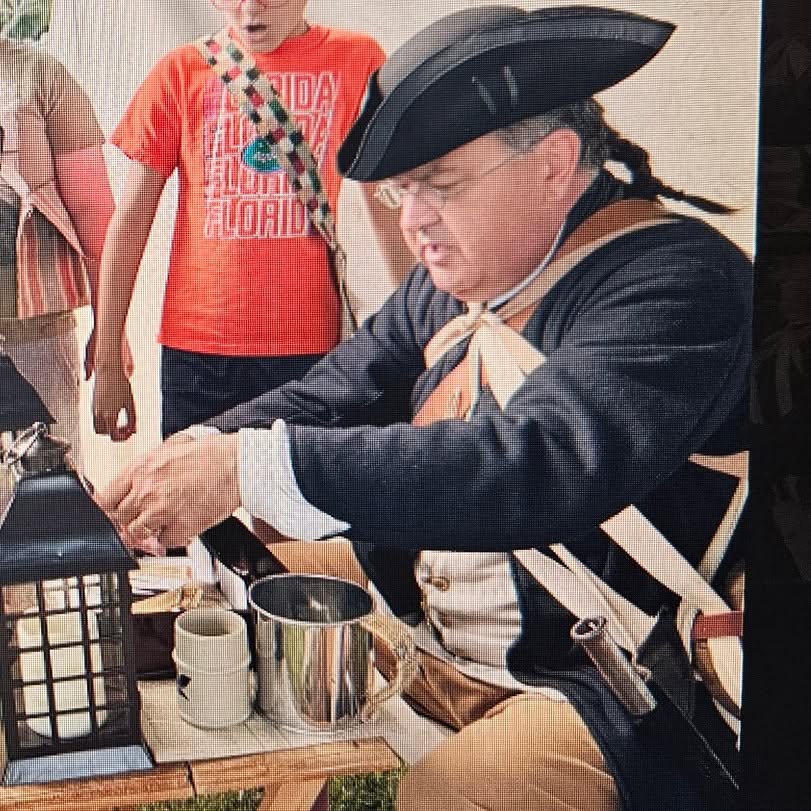
A Day in the Life of a Colonial Minuteman Step outside the classroom and step back in time to the year 1775, when ordinary farmers, tradesmen, and fathers were called upon to defend their homes and communities as colonial minutemen. This hands-on presentation will introduce fourth-grade students to what life was like for a colonial minuteman during the American Revolution. The experience will take place outdoors and will allow students to see, touch, taste, and experience history rather than simply read about it. To begin the presentation, each student will receive an original colonial-era artifact to carefully hold and examine. The students will be asked to observe the object and describe what they think it might have been used for before the speaker reveals its purpose and explains its importance to everyday life in colonial America. Students will then be introduced to the living conditions of a minuteman. A period-style A-frame tent will be set up nearby, allowing students to enter and experience the simple shelter a soldier might have used while away from home. Real period foods and typical colonial rations will also be displayed. Students will learn about the kinds of foods a minuteman might have carried or eaten, including the challenges of preserving, transporting, and preparing food during the Revolutionary War. The speaker will next explain the clothing worn by a colonial soldier, describing each item and why it was useful. Students will see and learn about the layers of clothing, footwear, hat, accoutrements, and other personal equipment that a minuteman would have carried. Particular attention will be given to the equipment necessary for military service, including the important role of the musket. The speaker will explain how the musket worked, how it was carried, and why it was such an important part of a soldier's equipment. The presentation will then move from everyday life to the experience of serving in the Revolutionary War. Students will learn that many minutemen were not professional soldiers. They were members of their local communities who could be called upon to serve when danger threatened. The speaker will discuss the sacrifices these men made by leaving their families, farms, and jobs to serve the cause of independence. Finally, the presentation will conclude with an interactive demonstration, the students will form a line and experience what it was like to receive payment for military service. Each student will be given a piece of Continental currency as payment for his or her "service." This activity will provide an opportunity to discuss what money looked like during the Revolutionary War and how soldiers were compensated for their service. By combining authentic artifacts, period clothing and equipment, food, a tent, Continental currency, and hands-on activities, this presentation will bring the world of the colonial minuteman to life. Students will leave with a better understanding of not only what a minuteman wore, carried, and ate, but also the sacrifices ordinary people made during the struggle for American independence.
Syracuse, NY 13219