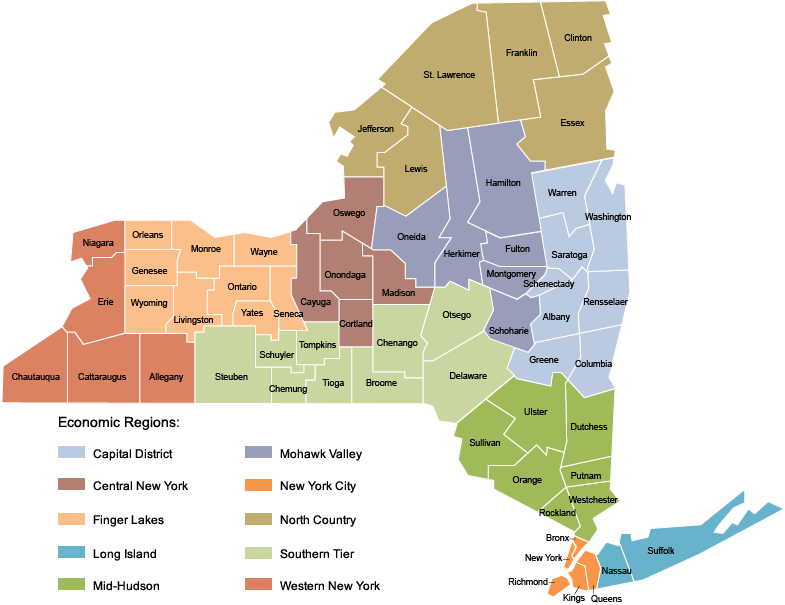
Regions Map
X

Ira Marcks
Card image
Ira Marcks is an award-winning graphic novelist and educator whose books have been recommended by the New York Times and American Library Association. Ira's in-person and virtual visits include two programs that can be schedule as a single classroom event or combined to create a full day author visit. Program 1: Making Comics. (Performance) An introduction to Ira’s creative process through the unique elements of comic storytelling: frame, character, setting, and speech bubble. This program is intended for a large group. Program 2: Drawing Faces. (Classroom Presentation) A hands-on lesson in designing believable and expressive comic characters. Students will learn Ira's step by step process for creating a cartoon face, followed by an insightful look at the role of facial expressions in comic storytelling. Only a pencil, paper, and Sharpie Marker are required to participate. This program is intended for classroom interaction. Testimonials: “Ira is that rare breed of artist who seamlessly blends his creative side and a seemingly effortless ability to teach. He brings a welcoming and open approach to arts education.” — Carolyn Fagan, Library Program Director, Troy, New York “Ira was one of the most dynamic presenters we have ever had. The students were fully engaged and the teachers were too. We hope he will come back. ” — Martha Sweeney, Head of The Odyssey School, Baltimore, Maryland
Jackie Fischer | Ceramic Sculpture
Card image
I’ll start each workshop with a slide show of my personal journey into the arts. This will start from my entrance into the arts back in high school where I was guided away from the arts by guidance counselors and administration. I’ve found this to be helpful to mention as many students can relate to this. My entrance into the arts started in ceramics and has led me to Mould Making, Metal Casting, Fiber & Silversmithing. I’ll discuss how perseverance, determination, hard work, and elbow grease has awarded me with scholarships, grants, shows, and teaching opportunities that enable me to travel to craft schools and residencies to continue making work. I’ll show the evolution of my work and include photos of in-process works from different studios throughout the years. This introduction will last about 30 minutes concluding with 15 minutes of questions. I’ll continue with about 20 minutes of demonstrations and disperse materials for hands-on building. At this point, I’ll make my rounds to meet with each student and troubleshoot their project ideas and the best way to construct them. I’ll call the class over to discuss which method of building would be best depending on the desired outcome as there is no one way to make something. Program Descriptions Workshop 1: Personification of an Object First steps into the world of Abstract art by warping reality one object at a time. Students are prompted to give humanistic features/characteristics to inanimate objects to create something that’s never existed before. Workshop 2: Re-Create Everyday Objects Students will be asked to bring in 3-5 everyday objects. We’ll discuss different methods of construction, play with scale, and explore the surface through color and texture. Refrain from bringing in objects that are made out of ceramic materials. Workshop 3: Large Forms inspired by the Ancient World and Today This workshop focuses on giving students the necessary skills to create large vessels. Students will be asked to find references of Vessels from Ancient Egypt, China, Mesopotamia, or contemporary artists. -hand-building on a larger scale helps beginner students quickly adapt to the properties of clay and respond to the material quicker than something small. This method of construction [coil-building] is the oldest method of building with clay, allows for lots of adjustments to form and scale for a beginner student, causes you to be attentive to the material. -Discuss the benefits of hand-building and the freedom/ability to build in a gestural way, why this is helpful. -Ask students to choose or draw a silhouette to mimic for their vessel – A blueprint/reference photo is VITAL to making a successful shape, make this mandatory, this will help assist them in achieving the shape they want to. -brief demo on darting– show them how to edit a shape that’s not going in the direction (shape-wise) that they’re going for. Workshop 4: Advanced Techniques Ask students to make an object (sculptural or functional) using the extruder and slab roller. These can be very gestural, architectural, or realistic. -Demo how to construct a form using slabs slumping/wrapping/template techniques (cut-outs slipped and scored together) -Emphasize that the appearance of the object will be determined by what method of construction students wish to use (explain and show examples of architectural vs. gestural, organic vs geometric forms, etc.) -Demo how to use an extruder and how to attach extruded shapes securely together/to the form. Clay & tools can be provided for an additional fee.
Tri-Cities Opera
Card image
For PreK-6th Grade: Tri-Cities Opera Opera invites you to the farm, where most of the animals like things to be ‘normal and pretty’–not noisy or different! When the new ducklings hatch, there is one ‘ugly duckling’ who doesn’t fit in with the others and spends her days reading by herself. But when a big, bad wolf comes on the scene, it will take someone like the ugly duckling–who has learned about big, bad wolves in her stories–to outwit him and teach the whole farm about the value of being true to yourself. Named as a nod to Binghamton’s famous carousels, Opera-Go-Round has been delivering the excitement of a fully-staged children’s opera to schools throughout New York State and northern Pennsylvania for nearly 50 years. Students engage with our singers and pianist to explore this unique art form with stories connected to curriculum standards and take away valuable social-emotional learning lessons. The program includes a 35-minute performance and 15-minute question and answer session with the Opera-Go-Round team. Dates are available from late September 2024 through May 2025. Contact ogr@tricitiesopera.org for more information or to schedule your performance! Cost: $1,400 within 50 miles of TCO Opera Center, $1,500 over 50 miles from TCO Opera Center. For Middle & High School Groups: TCO is excited to offer free tickets for your group to attend any of our mainstage productions. The Magic Flute (Sept 6 & 8, 2024) is an abridged version of a Mozart favorite. All Is Calm (Nov 15, 16, & 17, 2024) tells the story of the WWI Christmas truce. A Grand Night for Singing (Mar 8, 2025) includes favorites from Rogers and Hammerstein. Rigoletto (Apr 27, 2025) will be a grand version of a Verdi masterpiece. Contact operations@tricitiesopera.org to reserve your bloc of seats!
Act With Respect Always
Card image
Act With Respect Always is a “pay it forward” movement stressing the importance of one’s personal character. Through presentations and continued communication through mailings and social media, Act With Respect Always hopes others will join this mission or way of life and look to improve the world around them daily. Stressing kindness, love, compassion, empathy, acceptance and gratitude, Rich strives to make everyone aware of their daily actions. He introduces to each audience the 99% (Whats Your 99} and the 1% (Accept The 1), a personal character assessment plan. With this knowledge each person can access their own character “score” every minute of every day. The 99 has now brought the concept of mindfulness to everyone, to help to constantly draw ‘reflection’ towards their actions. Introducing The Visible Project to every audience has encouraged everyone to send notes of gratitude to someone: a friend, relative, a teacher or anyone that has shown kindness to them. The hope is that everyone will create their Solid Five (Who Are Your Solid5) connections that can be cultivated. They are the people who you can go to anytime, anyplace for physical and emotional support without judgement.
Mystery of the Character Surprise
Card image
Social and emotional learning (SEL) is an essential part of The Mystery of the Character Surprise show. In this 50 minute interactive assembly show students learn the communication skills and attitudes they need to help create a bully-free learning environment. Fifteen students participate on stage, putting these lessons into action – cooperating to stop a bully from ruining the assembly show. Students will also learn how to stop social aggression in its tracks. And they’ll have a blast while doing it! Topics covered throughout this bully-proofing magic assembly show include Being responsible in achieving goals, helping others, and empathy. Plus: Forms of bullying, solutions for victims, responsibilities of witnesses, tattling vs. telling. Includes: Courage | Flexibility | Perseverance | Effort | Making Good Choices | Bullies, Targets & Bystanders | Sense of Humor | Responsibility | Empathy | Honesty | Teamwork | Tattling vs. Telling
Sweethearts and Heroes
Card image
Sweethearts & Heroes is a social and emotional wellness organization dedicated to building sustainable networks of support, promoting empathy activation, and empowering students to become positive influencers within their communities. Our mission is to nurture Human Skills like empathy and compassion and develop positive leadership in young people. Through structured, spaced-repetition practices designed for age-mixed learning, we leverage the power of H.O.P.E. (Hold On, Possibilities Exist) and inspire students to Jump into Action to help others and establish healthy social norms. By leveraging your school influencers and Champion Teachers, Sweethearts & Heroes provides students with the tools, strategies, and skills to foster resilience and contribute to sustainable, compassionate school cultures. Our partnership approach involves scheduling our team for services based on your school, district, or organization’s desired pace and needs. This can be done with all our services and offers an independent approach to implementing the practices, tools, and messaging we bring to your community. Assemblies Our foundational assemblies introduce the world of Sweethearts & Heroes. In these assemblies, tailored to each grade level band (K-2, 3-5/6, 6/7-12), we’ll discuss the problem in the world today (this epidemic of hopelessness), how these Sweethearts give H.O.P.E. (Hold On, Possibilities Exist), and how Heroes Jump into Action to help others. Student-Teacher Empathy Program (S.T.E.P.) From day one, the Sweethearts & Heroes message has empowered our youth to be the change the world needs. S.T.E.P. is about taking our foundational K-2 and 3-5 grade messages and training high school students to deliver them in a small group classroom format. This propagates the message of Sweethearts & Heroes for your younger students while starting to build relationships across ages, setting up the crux of our youth leadership programs and age-mixed learning. B.R.A.V.E. 6-Week Youth Leadership Program B.R.A.V.E. stands for 16th-Century Bullies ‘R’ Action-Based, Vulnerable, and Empathetic. This is our student leadership system focused on 1) student empowerment, 2) empathy activation, and 3) Human Skills (SEL Core Competencies). It is uniquely designed to take young student leaders who can impact their school and build a culture and community of H.O.P.E. and Action through peer modeling, mentorship, and influence. We’ll introduce a group of up to 20 student leaders to Circle work and Bully Drill fundamentals. These students will implement vital age-mixed play-based learning by traveling to individual elementary classrooms to work with younger students Hero Huddles and Bully Drills. Circle Training | 1-Day, 2-Days Our Circle Training is designed for educators, administrators, students, and school teams. A single Sweethearts & Heroes Circle Trainer can work with up to 20 individuals at once in a training. Circle Training can be a single day, however, it is best completed over 2 days. Weavers of the Future Circle Training | 2-Days The Weavers of the Future Program trains older students to facilitate Circles, fostering healthy social norms and driving lasting, positive change in school culture. These student leaders will lead discussions that cultivate empathy, strengthen essential Human Skills (SEL), encourage perspective-taking, and build supportive peer networks. Master Weaver Circle Training | 3-Days Our train-the-trainer Master Weaver Circle Training is essential to creating a sustainable Circle culture and offering in-house training to future staff and students. This 3-day intensive training is designed to prepare an elite Circle team in your school who will be able to train new Circle facilitators. During this training, we’ll teach you how to tailor and deliver our foundational Circle Training, utilizing your personal stories of Circle and how it has impacted your life. The B.R.A.V.E. System Class Suite B.R.A.V.E. 101 | B.R.A.V.E. 102 | B.R.A.V.E. 103 | B.R.A.V.E. JRs The B.R.A.V.E. System Class Suite includes four classes to create systemic change that reaches all grade levels and implements our Circle work and age-mixed Bully Drill practices throughout your district. These experiential curricula embed our methodologies into your school culture through yearly B.R.A.V.E. lessons on leadership, social-emotional growth, and compassion. Community Ambassador Program Our community ambassador approach involves placing one of our team members in your school to work alongside your team as a long-term partner for school improvement and turning your school into a Circle culture. We provide individualized support weekly or bi- weekly throughout the school year to establish Circle as a consistent practice in your community and implement several of our programs based on your community’s needs.
Stephen Hill, Speak Sobriety
Card image
School Assembly: First Choice & A Second Chance This program begins with an introduction video aimed at knocking down the stigma attached to substance use disorder, educating the audience on the current drug epidemic, and setting the stage for a powerful, honest and heartfelt story. During interviews with Stephen’s family, it becomes clear he had a great childhood. “No one saw this coming.” Through sharing his lived experience, Stephen shows how mental health struggles can lead to addiction, the consequences of substance use, and how stigma prevented him from asking for help and contributed to his inability to recover. His storytelling technique allows each individual person to draw conclusions in their own meaningful way as it relates to their own life. By focusing on the progression of his dependence—beginning to end—attendees will gain a better understanding of how the choices they make today will affect them, and those around them, for the rest of their lives. The trifecta gateway drugs of nicotine, alcohol, and marijuana introduced to Stephen in 8th grade by older peers was just the beginning, eventually leading to self-destructive behaviors, criminal convictions, and a deadly opioid addiction that Stephen directly states he would have never made it out alive if fentanyl was as prevalent during his addiction as it is today. He takes you through his struggles and extremely difficult times, then slowly transitions into sobriety—emphasizing that recovery is possible. Through practicing gratitude, healthy routines, and changing his mindset to view his challenges as opportunities to inspire others, profound changes began to happen in Stephen’s life. The pivotal moment occurred just before he celebrated one year of recovery. Stephen was given a second chance to turn his mess into a message by working in the field of addiction treatment and prevention. From there, he gained the confidence to share his story, go back to college and eventually law school. Today, he speaks all across the country to inspire others to lead healthy, substance-free lives. Attendees will leave this program better educated on mental health and substance use, with practical tools and coping skills to work through challenges, a better understanding of the ripple effect—how our actions influence and impact others, and with a goal-oriented mindset to build a life worth protecting. Breakout Sessions: Break the Silence As a follow-up to the assembly, breakout sessions build on Stephen’s talk and focus on reinforcing key concepts. These sessions offer students a unique chance to ask personal questions and engage in open discussions in a comfortable, intimate setting. Each session delves deeper into the most crucial topics covered in the assembly, allowing students to ask relevant questions and share their takeaways. Typically held in Health and PE classes, these sessions can be tailored to specific grades or customized schedules. Stephen’s Breakout Session worksheet allows students to submit anonymous responses, fostering honesty and openness. The anonymous data collected offers critical insights for schools, helping them identify areas where further support or follow-up might be necessary. Additionally, these insights can be used to reinforce the positive takeaways from Stephen's message throughout the school year, ensuring that the impact of the sessions continues to resonate with students long after the program concludes. Assembly/Workshop: Know the Law, Save a Life An interactive program educating high school seniors on laws related to drugs and alcohol, as well as the legal and moral consequences of their actions. Stephen begins by qualifying himself through sharing his experience on both sides of the law, both as a defendant during his struggles with substance use and now as a defense attorney in recovery. Students learn basic courtroom terms, criminal laws, civil laws, and the potential penalties and liability that can follow from breaking these laws. Stephen gives fact patterns with real life scenarios so students can see how these laws play out in situations young people are faced with everyday. Some of the laws covered are the Good Samaritan Law, DWI/DUI & Zero Tolerance, Vehicular Homicide, Strict Liability for Drug-Induced Deaths, Social Host Liability, Providing Alcohol to Minors, Fake IDs, Hazing, Affirmative Consent to Sexual Activity, and Defamation of Character. Stephen also covers fentanyl and the misperception of harm due to the legalization of marijuana. Professional Development: Transforming Youth Discipline & Justice with Restorative Practices Transforming school discipline and criminal justice policies from punitive to restorative practices for youth struggling with substance use disorder not only saves lives—it builds lives worth defending. School administrators and law enforcement face significant challenges to find the most effective response when a young person—anyone under the age of 25—breaks the law or violates a code of conduct for drugs and alcohol. Stephen Hill brings extensive personal and professional experience on this topic. His unique perspective comes from his work as a criminal defense attorney with a focus on drug and alcohol related offenses, recovery coach, and youth motivational speaker. His work was inspired by his own adverse childhood experiences—out-of-school suspensions, removal from school sports teams, felony convictions—the labels and stigma that came with it, and the trauma that followed. We often hear administrators and law enforcement, when faced with an individual who violated the law or code of conduct, must make decisions by balancing the best interests of the individual and the community. Stephen’s training helps people recognize how the best interests of individual offenders and communities align more than most people think. Through sharing his personal testimony and advocacy work today, Stephen reveals innovative solutions for schools and communities to develop systems to achieve better outcomes for young people facing behavioral and/or criminal justice challenges because of substance use disorder or a co-occurring disorder. At the end of this session participants will be able to: Recognize situations, when dealing with youth discipline and justice, that require restorative practices to achieve better outcomes Explain why punishment is not effective for specific or general deterrence for youth struggling with substance use disorder or a co-occurring disorder Communicate the ideology and evidence behind restorative practices—particularly for youth—so more people in their community can understand and support restorative practices Develop systems and procedures for youth discipline and justice that add more protective factors rather than removing them with strictly punitive measures
Caroga Arts Collective
Card image
Caroga Arts Collective is a 501(c)(3) nonprofit dedicated to presenting world-class, interdisciplinary arts experiences in the Southern Adirondacks. Through over fifty performances and events annually, Caroga Arts brings together artists across genres to collaborate and engage with diverse audiences. Based at historic Sherman's Park in Caroga Lake—a cherished cultural gathering place with a rich legacy—Caroga Arts draws inspiration from its setting to create accessible, community-centered artistic and educational experiences. Its signature programs—including the Caroga Lake Music Festival, the Strings Project & Arts Collaborative Education (SPACE) Program, the InterArts Symposium, the Myhil Film Series, and artist residencies—serve as platforms for both artistic excellence and community connection. Committed to arts education, Caroga Arts offers outreach programs, workshops, masterclasses, and interactive school assemblies that inspire creativity and active participation in students of all ages. By combining a warm, intimate setting with innovative programming, Caroga Arts Collective creates transformative experiences that enrich, educate, and inspire.
Rooted Movement
Card image
The day-to-day life of children and teens can be hectic and challenging on multiple levels. Experiencing stress, anxiety and exhaustion can affect physical and emotional well-being, social relationships, academic success and sleep. Rooted Movement Classroom Yoga offers students skills and experiences that can help increase self-awareness and build resilience. As an embodied practice of mindfulness, yoga asks us to pay attention to what we are feeling, both physically and emotionally, in the present moment. These practices can send signals of safety back to the brain and soothe the nervous system. Our program (based on the work of Jennifer Cohen Harper’s Little Flower Yoga) focuses on five main areas: 1. Connection to oneself, one’s environment and others. 2. Breathwork, which promotes communication between the body and the nervous system. 3. Movement to help process stress hormones and give our students a sense of being strong, flexible and capable. 4. Focus Practice: when we can observe our minds wandering or becoming fixated on negative thoughts, we can bring the mind back to the object of focus and improve our capacity to stay present in the moment. 5. Relaxation to alleviate stress and tension. Whether in a single classroom session, an interactive workshop or over the course of a residency, students will have the opportunity to learn a variety of techniques, so they can gain some experience and deepen their own relationships with these practices. Teaching Themes around which we can develop a program to serve your students: 1. Interoception: what does your body feel like on the inside? 2. Building strength: how our bodies can teach our minds that we’re strong 3. Yoga in a Chair: learning yoga snacks you can do throughout the day 4. Mindfulness meditation and relaxation to down-regulate the nervous system 5. Balance practices 6. Spacial awareness and proprioception 7. Building a collaborative community through movement 8. Our brains, our bodies, our nervous systems and movement (4th grade and up) 9. Imaginative practices: connecting yoga poses to seasonal imagery, animal world, relevant classroom curriculum, etc. (K-3) 10.Dealing with challenges in a playful way 11.Self-reflection Professional Development: Rooted Movement also offers professional development for teachers and staff, including self-care programs and yoga/mindfulness tools that can be integrated into the classroom. Some Professional Development Topics: Basic Yoga Core Conditioning Chair Yoga Restorative Yoga for Deep Relaxation Breathwork and Meditation Applying Yoga for Social Emotional Learning in the Classroom
DCA Productions
Card image
We offer several performers from our roster for BOCES Programs.
LAUGH-A-LOT POETRY
Card image
Darren Sardelli is an empowering poet and author who makes poetry exciting for young people. His assemblies are interactive, engaging, and very funny. Younger students act out poems with Darren, figure out poetry riddles, and learn how to express themselves in positive ways. Older students discover easy ways to put ideas in motion, make their writing stand out, and learn how to empower themselves with words. They’ll be motivated to read and write poetry, start an idea book, and think in a creative direction. LAUGH-A-LOT POETRY (K-5th grade assemblies and writing workshops) THE POWER OF WORDS! (Empowering assemblies for middle school and high school students) ADVENTURES IN RHYME (Pre-K, K, 1st - Introduction to Poetry) THE FUNNY POETRY SHOW (Family Night)
Kevin Kurtz
Card image
Kevin Kurtz is an award-winning nonfiction children's author (www.kevkurtz.com) of over 25 books for kids grades kindergarten to middle school about science, nature, and technology. Kevin can provide up to five 45-minute presentations during an all day school visit. He can do different presentations for each grade level. For assembly programs, Kevin can read and discuss one of his books or present highlights from more than one book. The highlights can be focused on specific science curriculum topics, on the process of writing nonfiction, or be a grade level-appropriate “greatest hits” selection from my books (You can see the list of highlight topics here: http://www.kevkurtz.com/school-visits.) The book reading and highlights presentations will also include sections on how Kevin became a children’s author, the process he uses to write nonfiction, and a Q&A session at the end. Kevin can also do writing workshops for smaller groups with a maximum of 30 students per program. Workshops are for grades 3 and up. Kevin will lead students through the process of researching, writing, and editing nonfiction and work as a group to produce informational texts. Writing workshops can be extended to a week-long residency where Kevin will lead groups of students through the steps of creating nonfiction texts in more detail.